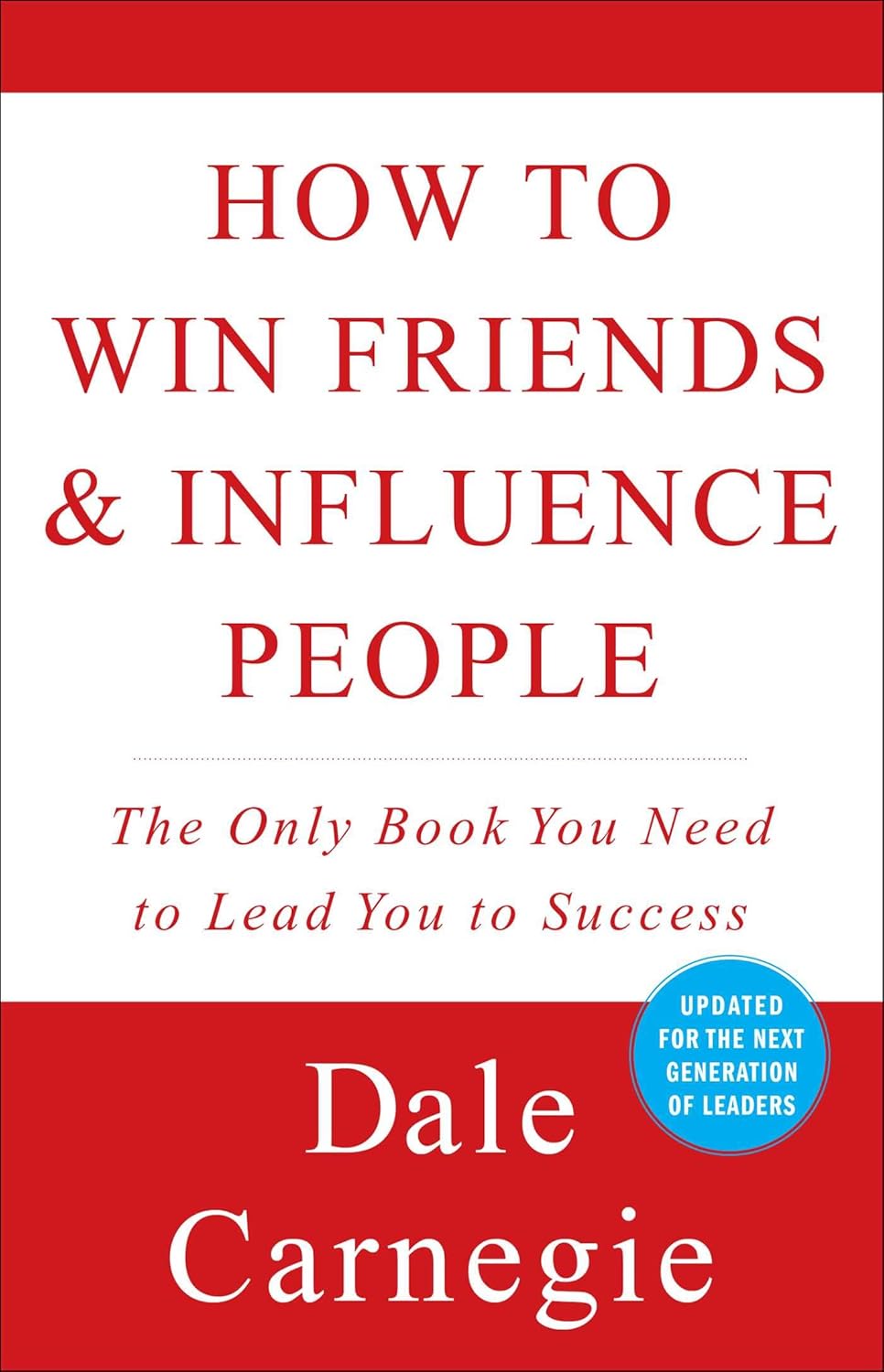
Dale Carnegie's "How to Win Friends and Influence People" stands as the most influential book on interpersonal relationships and human psychology ever published, having sold over 30 million copies since its 1936 release and remaining continuously in print for nearly nine decades. Carnegie's revolutionary insight—that success in life flows fundamentally from the quality of relationships you build—transformed how individuals and organizations approach communication, leadership, and personal development. The 2025 deluxe edition represents the finest presentation of Carnegie's timeless wisdom, combining the complete original text with enhanced illustrations, beautiful production quality, and supplementary materials that deepen your understanding and accelerate your application of these life-changing principles. Whether you're seeking to enhance professional relationships and advance your career, transform personal relationships and build deeper connections, or simply understand the psychology that makes people respond positively to you, this deluxe edition provides the comprehensive guide that has shaped billions of interactions and thousands of successful careers.
Dale Carnegie: The Man Who Understood Human Nature
Dale Carnegie (1888-1955) was born on a farm in Missouri and pursued a life dedicated to understanding human nature and helping people become their best selves. Unlike academic psychologists studying people in laboratories, Carnegie studied people in real life, observing how they actually responded to different approaches and why certain individuals naturally attracted loyalty and positive relationships while others struggled with interpersonal effectiveness. His early career as an actor and salesman provided direct experience with persuasion and human psychology. Through decades of teaching, consulting, and observing human behavior, Carnegie developed a systematic understanding of the principles that govern how people respond to each other.
What distinguished Carnegie's approach was his focus on genuine human connection rather than manipulation. Contemporary literature often taught techniques for manipulating people—tricks and tactics for getting what you wanted regardless of the other person's interests. Carnegie's revolutionary insight was that lasting influence comes not from manipulation but from genuine interest in others and authentic communication. This simple but profound understanding transformed his work and its impact. People who applied Carnegie's principles didn't merely become more persuasive; they developed deeper, more meaningful relationships that benefited all involved. This authenticity-based approach proved more powerful than any manipulation technique could be.
The Psychology of Human Motivation
Carnegie's fundamental insight was that every human action is motivated by underlying psychological drives. Understanding these drives—the desire to feel important, the need for recognition, the longing for respect—enables you to interact with people in ways that address their underlying motivations rather than opposing them. Someone demanding recognition isn't being unreasonable; they're responding to a fundamental human need. Rather than resisting this need, you can honor it through genuine acknowledgment. A person growing defensive in conversation is protecting something they value; rather than increasing pressure, you can ease tension through understanding.
This perspective shift transforms interpersonal dynamics. Instead of viewing difficult people as obstacles or opponents, you see them as individuals with legitimate underlying needs. This enables compassion and constructive problem-solving rather than conflict escalation. Carnegie discovered that people respond exponentially better when their underlying needs receive acknowledgment, even if you cannot fulfill all their requests. An employee whose contribution goes unrecognized experiences resentment despite receiving excellent compensation. That same employee experiences profound loyalty when their contributions receive genuine recognition. The difference costs nothing in financial terms but proves invaluable in building motivated, engaged relationships.
The Core Principles That Change Lives
Carnegie systematizes his insights into fundamental principles that, though simple, prove revolutionary in application. The opening principle—don't criticize, condemn, or complain—directly challenges the instinctive approach many people take when disappointed or frustrated. Criticism, while often intended as constructive feedback, typically triggers defensive reactions that make people less receptive to improvement suggestions, not more receptive. People hearing criticism focus on defending themselves rather than considering whether the criticism contains valid points. Carnegie emphasizes that the human instinct to defend against criticism proves nearly irresistible. Rather than triggering these defensive reactions, effective communicators find ways to make desired behavioral changes attractive rather than criticizing current behavior.
The next principle—give honest and sincere appreciation—addresses the universal human hunger for recognition. Paradoxically, while people desperately want recognition, many individuals provide it far too rarely. They assume positive performance is expected and requires no acknowledgment, only failures deserve attention. This creates organizational and relational cultures where people feel unappreciated despite performing excellently. Carnegie advocates deliberate, consistent expression of genuine appreciation for specific accomplishments. This proves far more motivating than compensation or criticism, because it addresses the fundamental human need to matter and be recognized.
Later principles address the psychology of persuasion and negotiation. Rather than presenting your own interests as the primary focus, effective communicators frame proposals in terms of how they benefit the other party. This isn't dishonesty; it's recognizing that people naturally prioritize their own interests and respond more receptively when they see how proposed changes serve their interests. A manager proposing new procedures will face resistance if framed as benefiting the company. That same proposal meets receptivity when framed in terms of how procedures will reduce employee workload or stress. Both frames are honest; they simply emphasize different aspects of the impact.
Building Genuine Friendships and Lasting Influence
Carnegie's principles for building genuine friendships emphasize authentic interest and engagement. People distinguish quickly between those genuinely interested in them and those performing interest to achieve personal objectives. Genuine interest in others—manifested through asking thoughtful questions, remembering details they've shared, and demonstrating care for their wellbeing—creates bonds that prove resilient and satisfying. Conversely, people automatically resist those clearly interested in them only insofar as they serve personal objectives. This explains why relationship-building approaches emphasizing manipulation prove so fragile; once people recognize manipulation, trust disappears.
Carnegie emphasizes that friendship and influence develop gradually through consistent demonstration of sincere regard and reliability. You cannot force friendship; you can only create conditions where it naturally develops. These conditions include regular positive interaction, demonstrated reliability (doing what you promise), genuine interest in the other person's wellbeing and perspectives, and authentic communication. When these conditions exist, relationships deepen naturally. Carnegie illustrates this through countless examples of individuals whose careers transformed through deliberately cultivating genuine relationships rather than pursuing transactional interactions.
The Deluxe Edition: Honoring Carnegie's Human Wisdom
This 2025 deluxe edition presents Carnegie's insights in a form befitting their importance. The binding uses full cloth with embossed design elements representing human connection and communication. The paper stock is premium weight with warm cream tone that encourages extended reading. Typography has been enhanced with generous spacing and readable font sizes that accommodate various vision preferences while maintaining elegant presentation. Throughout the volume, illustrations depict the principles in action—scenes showing genuine listening, sincere appreciation being expressed, and people genuinely connecting across differences.
The dust jacket features an original illustration capturing the essence of authentic human connection, with diverse figures engaged in genuine conversation and positive interaction. Chapter headings use decorative elements reflecting different aspects of human relationship and communication. The overall design communicates through every element that this work addresses something fundamental to human experience—our deep need for connection, understanding, and appreciation from others.
Supplementary Materials That Deepen Application
Beyond the core text, the deluxe edition includes practical tools transforming reading into behavioral change. A comprehensive foreword contextualizes Carnegie's work and explains the psychological principles underlying his teachings. Enhanced appendices include communication planning worksheets, relationship assessment tools, and scripts for practicing key principles in various contexts. A dedicated "Appreciation Journal" provides structure for deliberately practicing Carnegie's principle of sincere appreciation, helping establish new relationship patterns through consistent practice. Study guides for each major principle enable deeper understanding and more complete application across diverse relationships and contexts.
The Psychology Behind Carnegie's Principles
While Carnegie wrote before contemporary psychology emerged, his principles align remarkably with modern neuroscience and psychology research. The principle that criticism triggers defensive reactions reflects the brain's threat response system—when you experience criticism, your amygdala (threat-detection center) activates, shifting focus to self-defense rather than receptivity. Appreciation, conversely, activates reward systems, creating positive associations and increased receptivity. Carnegie's observation that people resist criticism but respond to appreciation flows naturally from brain physiology.
The principle of making people feel important addresses the brain's reward systems related to status and recognition. Human brains evolved in social hierarchies where status determined access to resources and reproductive opportunity. Modern humans retain this deep status sensitivity. Recognition directly stimulates reward systems, releasing dopamine and creating positive emotions. This explains Carnegie's observation that genuine recognition proves more motivating than monetary reward in many contexts—it directly addresses fundamental neurochemical reward systems.
Real-World Transformation Stories
Countless individuals attribute profound professional and personal transformation to applying Carnegie's principles. A man struggling with chronic unemployment discovered through Carnegie's work that his interviews failed because he talked excessively about himself, conveying disinterest in the employer's actual needs. By shifting his approach to asking thoughtful questions about company challenges and demonstrating genuine interest, he transformed interview outcomes and eventually obtained a position he thrived in. A woman whose marriage was deteriorating found Carnegie's insights on appreciating her husband's contributions revolutionary. Rather than criticizing what he failed to do, she began acknowledging his positive contributions. His responsiveness and engagement increased dramatically as he experienced appreciation rather than chronic criticism.
Business owners implementing Carnegie's principles report transformed organizational cultures where employees feel genuinely valued rather than merely utilized. One manager transformed her department's performance by systematically applying Carnegie's principle of sincere appreciation, specifically acknowledging each team member's contributions weekly. Productivity increased, turnover decreased, and employee satisfaction scores improved dramatically. These weren't new compensation packages or restructuring initiatives; they were behavioral changes implementing principles Carnegie identified decades ago.
Who Benefits Most from This Book
This book proves invaluable for anyone whose success depends on relationships—which encompasses virtually all professional and personal success. Sales professionals discover techniques for building genuine customer relationships that transcend transactional interactions. Managers and leaders learn how to motivate teams through authentic appreciation and genuine interest rather than coercion or incentive manipulation. Parents find frameworks for building deeper relationships with children and influencing them constructively. Professionals in any field discover how relationships and genuine connection determine career advancement as much as technical competence. Entrepreneurs learn that business success depends on relationships with customers, employees, investors, and partners.
People struggling with loneliness or social disconnection find practical guidance for building meaningful relationships. Young people beginning their careers discover that interpersonal skills determine career trajectories as much as technical abilities. Even highly successful individuals often return to Carnegie, deepening their understanding of principles they consciously apply. The universal applicability reflects that Carnegie addressed something fundamental to human experience—how to create connections and influence that both parties experience as mutually beneficial.
Pros and Cons
Pros:
- Universal principles applicable across all relationships and contexts
- Grounded in genuine human psychology rather than manipulation tactics
- Principles remain valid despite nearly 90 years since publication
- Numerous documented examples of transformative impact
- Practical techniques immediately implementable
- Addresses both professional advancement and personal fulfillment
- Beautiful premium edition encourages repeated reading
- Supplementary materials provide structure for practice and integration
- No financial cost to implementation—results depend on changed behavior
- Builds skills applicable across entire lifespan
- Excellent for anyone in people-facing roles
- Transforms workplace and relationship dynamics for entire organizations
Cons:
- Requires genuine behavior change, not mere technique adoption
- Some examples reflect early 20th-century contexts requiring contextualization
- Premium pricing ($69.99) may challenge budget-conscious readers
- Length requires sustained engagement to extract maximum value
- Requires authentic interest in others—cannot fake genuine appreciation
- Results take time; immediate dramatic change unrealistic
- Some principles more applicable to certain personality types
- Not suited for readers seeking to manipulate rather than genuinely connect
Comparing Relationship and Influence Books
Contemporary literature on relationships and influence includes various approaches. Negotiation texts emphasize strategic positioning. Psychology books address relational dynamics from scientific perspectives. Dale Carnegie's work distinguishes itself through its foundation in genuine human connection and authentic relationships. While other books provide valuable specialized insights, Carnegie's comprehensive framework for building relationships through authentic interest and sincere appreciation remains unmatched. His principles form the foundation upon which more specialized relationship and negotiation approaches build effectively.
The Value Proposition
At $69.99, this deluxe edition represents extraordinary value. A single improved professional relationship might result in professional opportunities worth hundreds of thousands of dollars. A transformed personal relationship might prove priceless in terms of life satisfaction. The principles in this book have generated transformations in countless lives across nine decades. For anyone serious about improving relationship quality and personal influence, this investment proves incomparably valuable. The premium edition's beauty encourages repeated reading, deepening understanding and application with each pass through the material.
Conclusion: Building Genuine Relationships That Transform Lives
Dale Carnegie's "How to Win Friends and Influence People" endures as the definitive guide to building genuine relationships and positive influence in your life. By grounding his approach in authentic human psychology and genuine interest in others, Carnegie created work that remains valid and powerful nearly nine decades after publication. This deluxe edition places his transformative wisdom in a beautiful form that honors the profundity of his insights. Whether you're seeking to enhance professional relationships, deepen personal connections, or simply understand the psychology that makes people respond positively, this edition merits a central place in your personal library.
Build Genuine Relationships and Positive Influence
Experience Dale Carnegie's revolutionary approach to human relationships. Transform your professional and personal life through authentic connection and influence.
Shop Now